- Home
- Services
- AWS Consulting
- Generative AI & Machine Learning Solutions
- Cloud Transformation & Migration Advisory
- Application Modernization
- Cloud & Application Managed Services
- Data & Analytics Solutions
- Custom AI Development
- Tech Talent Augmentation
- DevOps & CI/CD Automation
- Custom Software Product Development
- Enterprise Software & Product Development
- Full-Stack Web & App Development
- Discover
- Portfolio
- Case Studies




Social Media
Custom AI Development Services
DATADOVE builds AI software that runs in production: applications powered by large language models, AI agents that automate workflows, assistants that answer from your own documents, and document extraction at enterprise scale. We engineer the whole system around the model, including data pipelines, integrations, evaluation, guardrails and monitoring, on AWS or Azure.
AI Solutions We Develop
From a single AI feature in your product to complete AI-driven systems.
LLM-Powered Applications
Applications built on models such as Claude through Amazon Bedrock or GPT through Azure OpenAI, designed around your data and users.
Intelligent Document Processing
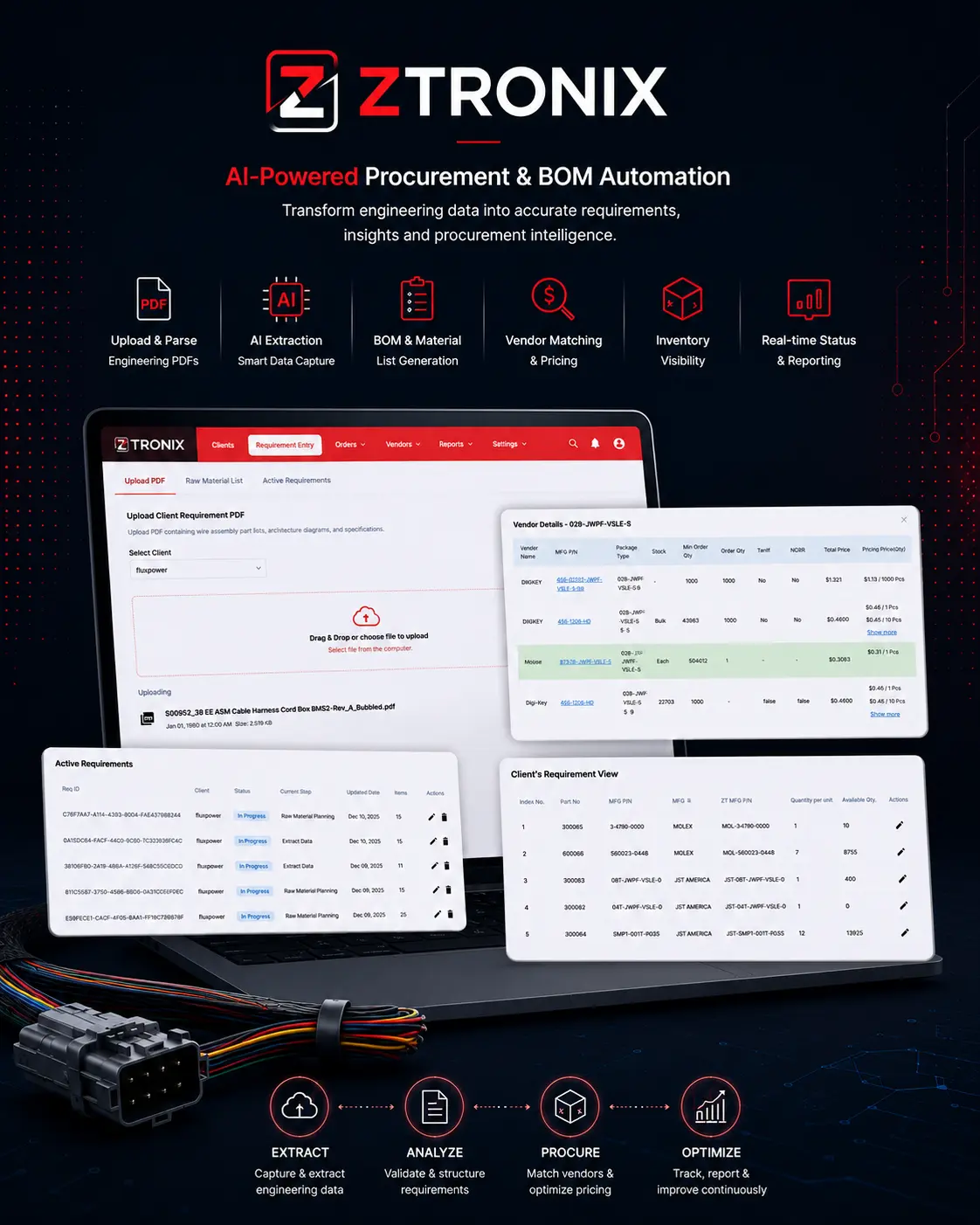
Extract and structure data from PDFs and scanned documents with OCR and large language models. Ztronix is our LLM-based system that automates document data extraction at enterprise scale.
See Ztronix →AI Agents & Workflow Automation
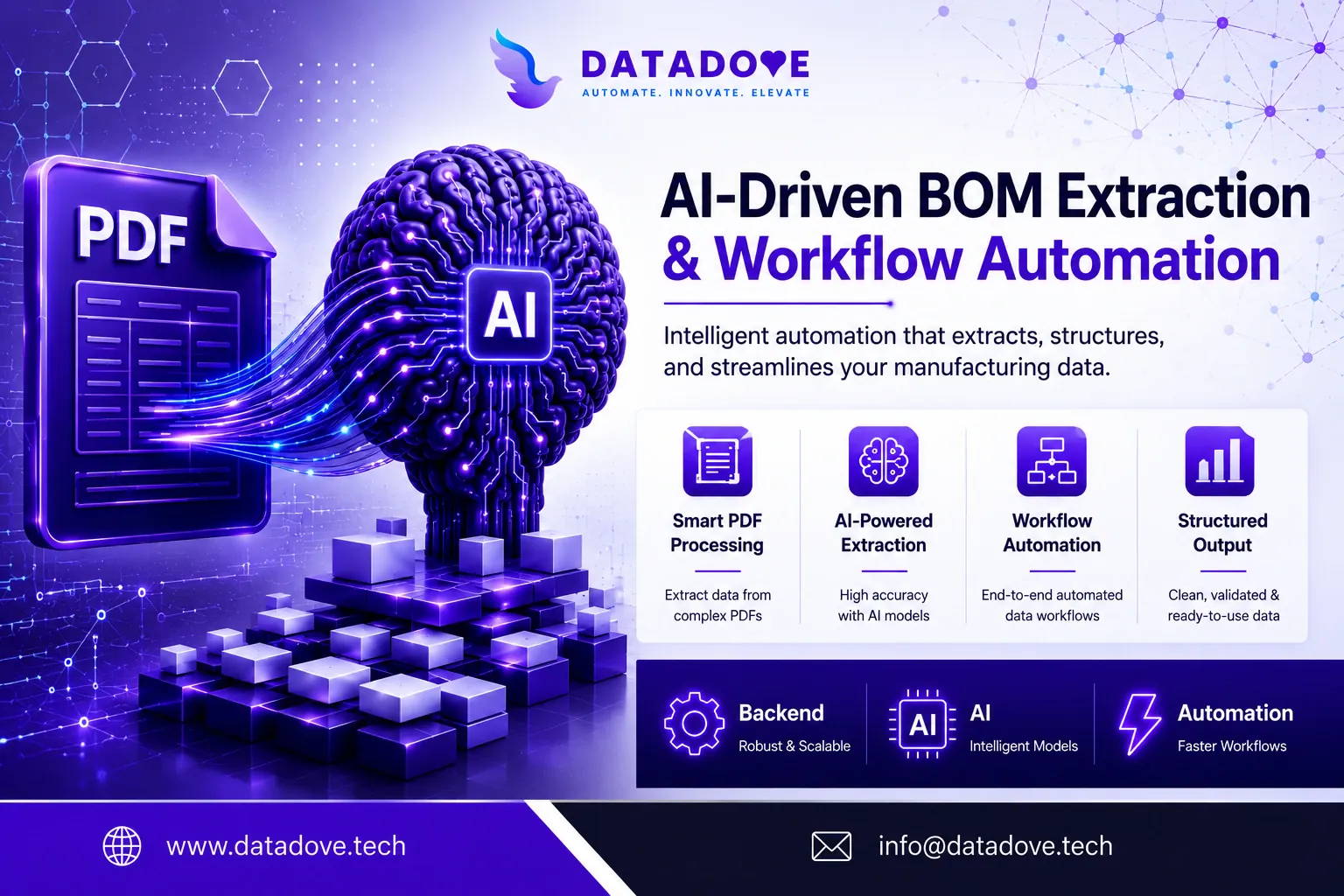
Agents that read documents, call your systems and complete multi-step tasks, with a human review step where it matters.
Read the manufacturing automation case study →RAG Knowledge Assistants
Assistants that answer questions from your policies, manuals and knowledge base with sources cited, using retrieval-augmented generation.
AI Features in Existing Products
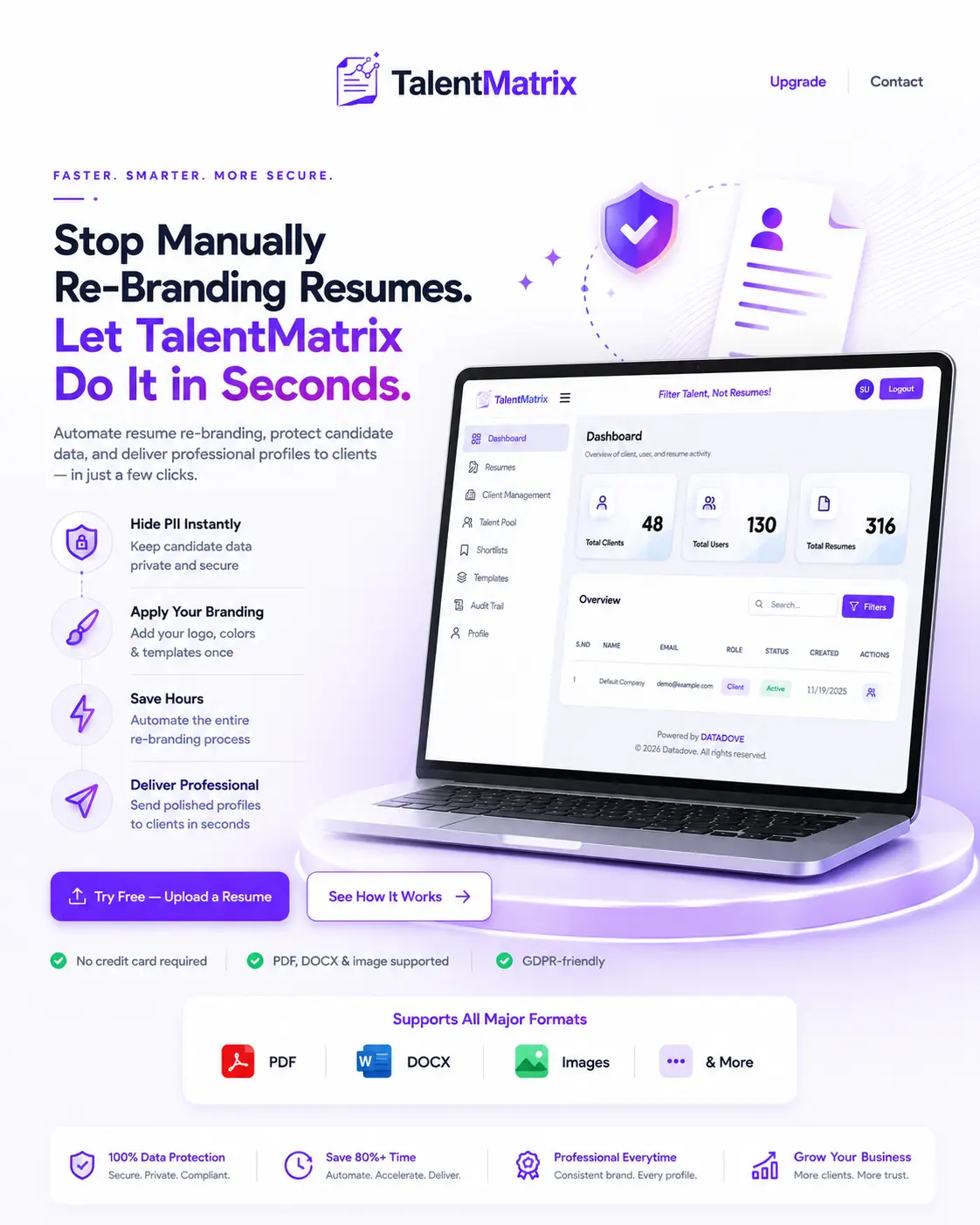
Add search, summarization, classification or data redaction to software you already have, like TalentMatrix's automated candidate PII redaction.
See TalentMatrix →Anomaly Detection & Analytics
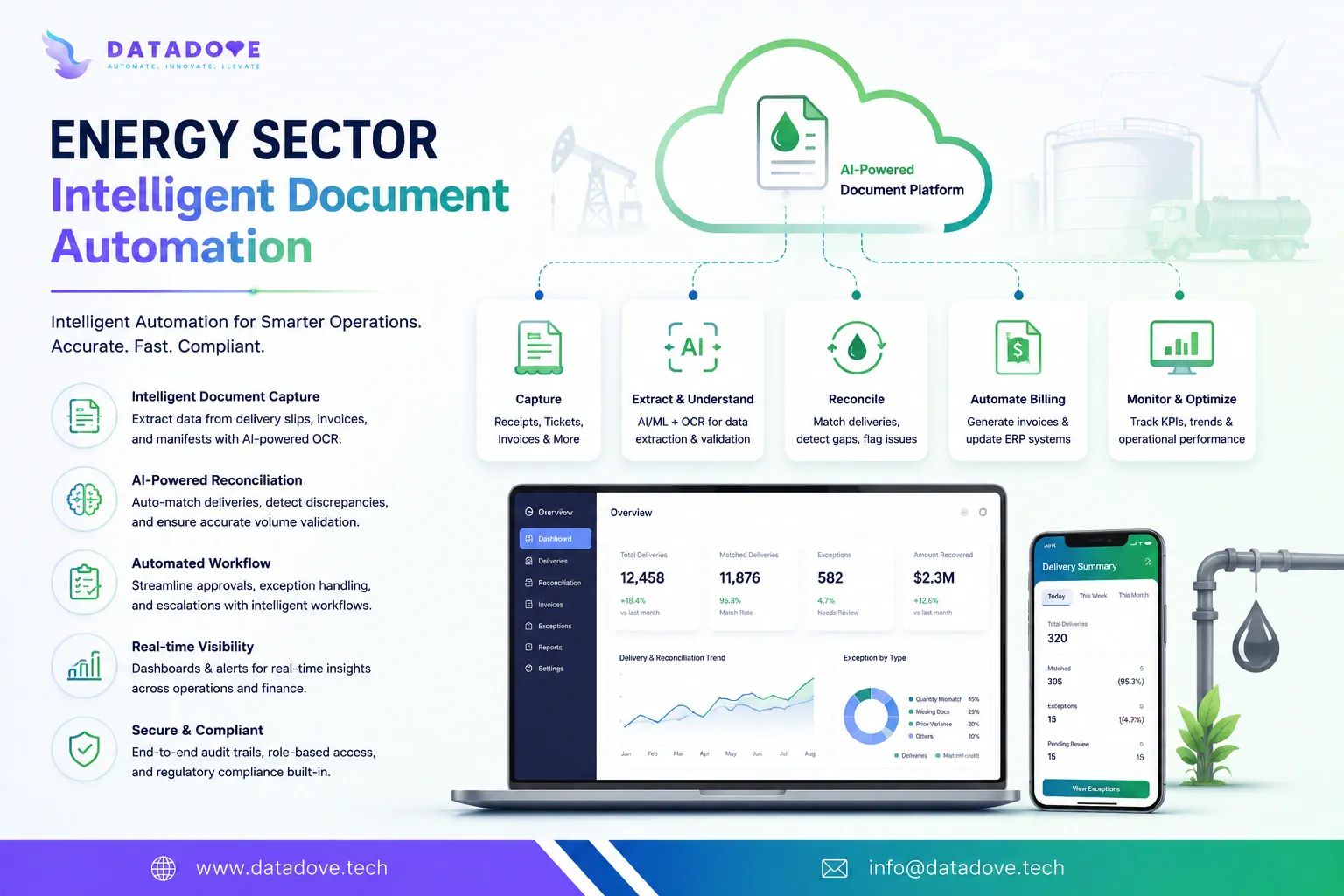
Models that flag unusual transactions and patterns in operational data, as in our energy sector reconciliation project.
Read the energy case study →API, RAG, Fine-Tuning or Custom Model? How We Choose
The right approach depends on your data, accuracy needs and budget. Most projects need less custom modeling than people expect.
Pre-Built Model via API
Call a hosted model such as Claude or GPT through Amazon Bedrock or Azure OpenAI with well-designed prompts. Fastest and cheapest to start; right when the task needs general language skills, not your private knowledge.
Retrieval-Augmented Generation (RAG)
Retrieve relevant passages from your documents and give them to the model with each question, so answers are grounded in your data and can cite sources. Right when knowledge changes often or must stay up to date.
Fine-Tuning
Train an existing model further on your examples to learn a specific format, tone or narrow task. Worth it when prompting and RAG plateau and you have hundreds to thousands of good labeled examples.
Custom Model
Train a model for a specialized problem, such as classification or anomaly detection on your own operational data. Right when no general model fits and you have enough data to train one.
How We Secure AI Systems
AI adds new risks on top of normal application security. We design for them from the first prototype.
Prompt-Injection Defenses
Untrusted text from users, documents or websites is kept separate from instructions, and model outputs are validated before anything acts on them, following the OWASP Top 10 for LLM Applications.
Data Isolation & Access Control
Models run inside your own AWS or Azure account. Retrieval respects user permissions, so the assistant only answers from documents the person asking is allowed to see.
Human Approval for Agent Actions
Agents get the minimum permissions they need, and high-impact actions such as payments, deletions or external messages wait for a person to approve.
Logging & Monitoring
Prompts, responses and agent actions are logged for audit, with alerts on unusual behavior, cost spikes and drops in answer quality.
How We Build AI That Works in Production
Most AI projects stall after the demo. Ours are built to ship.
1. Use Case & Data Assessment
We pick a use case with clear value, check the data behind it, and agree how success will be measured.
2. Prototype on Real Data
A working prototype is tested against real examples, so you see actual accuracy before committing to a full build.
3. Production Engineering
We add integrations, guardrails, access control, logging and cost controls, and deploy inside your own cloud account.
4. Monitor & Improve
Accuracy, latency and cost are tracked after launch, and the system is tuned as your data and needs change.
Results From Our AI Projects
~80% less manual extraction time
AI-powered bill-of-materials extraction for a manufacturer, built on Amazon Bedrock.
Manufacturing case study →99.8% reconciliation accuracy
OCR and AI extraction with anomaly detection for a petroleum distribution enterprise.
Energy case study →85% automated compliance reporting
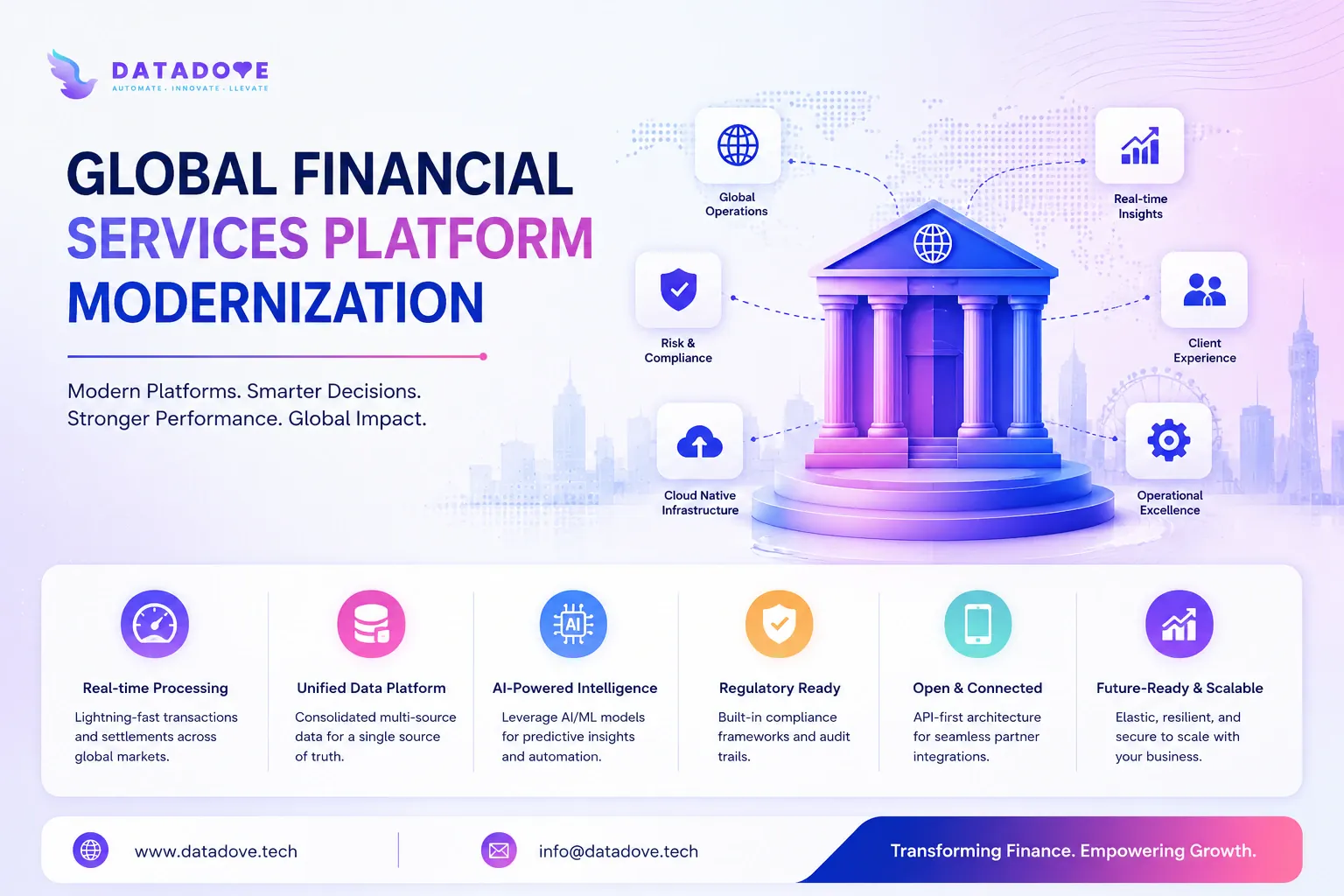
AI-powered compliance as part of a global investment firm's serverless modernization.
Financial services case study →Need AI strategy first?
If you are still deciding where AI fits, start with our generative AI consulting on AWS and Azure.
Generative AI consulting →AI Products We've Built
Related Case Studies
Related Services
Frequently Asked Questions
What kind of AI applications do you develop?
LLM-powered applications, AI agents that automate multi-step workflows, assistants that answer from your own documents (RAG), document extraction and processing, and anomaly detection on operational data.
When do we need RAG instead of fine-tuning?
Use RAG when the model needs your knowledge: policies, product data or documents that change over time. It keeps answers current and lets them cite sources. Use fine-tuning when the model needs a skill or format, such as a specific writing style or a narrow classification task. Many systems start with RAG and only add fine-tuning if accuracy plateaus.
What is an AI agent, and how is it different from a chatbot?
A chatbot answers questions. An AI agent can also take actions: it plans steps, calls your systems through APIs, reads the results and continues until a task is done, such as extracting a document, checking it against records and filing it. Because agents act, we limit their permissions and require human approval for high-impact steps.
What data do we need before starting an AI project?
Less than most teams expect. For RAG you need the documents the assistant should answer from. For extraction or classification, a few hundred real examples with correct answers let us measure accuracy. If you plan to fine-tune or train a model, you need more labeled data. We review what you have during the use case assessment.
How is AI development different from your generative AI consulting?
Consulting helps you decide where AI fits and which platform to use. AI development is building the software itself: the application, integrations, data pipelines, evaluation and production deployment. Many projects start with consulting and continue into development.
Which AI models and platforms do you use?
We build with large language models such as Claude and GPT through Amazon Bedrock and Azure OpenAI, plus OCR services such as Amazon Textract, choosing the model by accuracy, cost and where your data needs to stay.
Can you add AI to our existing software?
Yes. We integrate AI features such as search, summarization, classification or data extraction into existing products through APIs, without rebuilding the product.
How do you make sure the AI gives accurate results?
We test against a set of real examples before launch, add guardrails and human review where errors are costly, and monitor accuracy in production. For example, our energy sector project reached 99.8% reconciliation accuracy.
Is our data safe when building AI solutions?
We deploy inside your own AWS or Azure account with access controls and logging. Amazon Bedrock and Azure OpenAI both state that customer data is not used to train their base models.
Schedule A Free Consultation
Connect with our experts to discover how our IT solutions can streamline your operations, boost performance, and support your business goals.